


Dolphin Season 2025: Fieldwork Blog

2025 promised to be the longest and most active research period in Aomori yet, however life decided to intervene as it so often does…

This year was to be the year I attempted my eDNA study, collecting seawater samples to uncover the genetic information of Mutsu Bay's spring/summer visitors: the Pacific white-sided dolphins. Recent work (Suzuki et al., 2023) has shown there are at least two distinct populations in coastal waters that are morphologically and genetically different. As part of my PhD I wish to confirm if the Mutsu Bay dolphins belong to one of these two populations. Environmental DNA (eDNA) is a non-invasive way to collect genetic samples from cetaceans. We were prepared for a ten-week fieldwork trip, arriving earlier in the season than ever before…so early in fact we beat the dolphins to it. From April 7th-14th we spent a week scanning the sea from land for signs of their arrival, the distinctive fins and tell-tale splashes of travelling groups. We checked in often with our fisherman captain inquiring if he had spotted them yet during his morning work but to no avail. Unfortunately illness and team complications hindered us from welcoming the first wave of dolphins back to the bay and we were forced to leave, carrying with us our doubts of whether we would be back to see them at all this year.

Luckily with sheer determination to continue my work and spend time with the creatures I love so much, I went back to Aomori towards the end of May to collect what data I could in the remaining time, focusing solely on my photo-ID study. The first week of the trip I was joined by the wonderful Kanda-san, a staff member at my university, who had very kindly agreed to support me and my work after the disaster of the April trip. The pair of us conducted boat surveys in the mornings, spent afternoons running up and down the coast chasing feeding dolphins, and sat peacefully through sunset landwatches together - joined by creeping macaques coming down from the mountain. The beautiful landscape of this remote place I am lucky enough to feel at home in, restored a sense of calm in me again. There is no happier time for me than when I am with these dolphins. We were even treated to a beautiful individual with a unique striped colouration pattern.
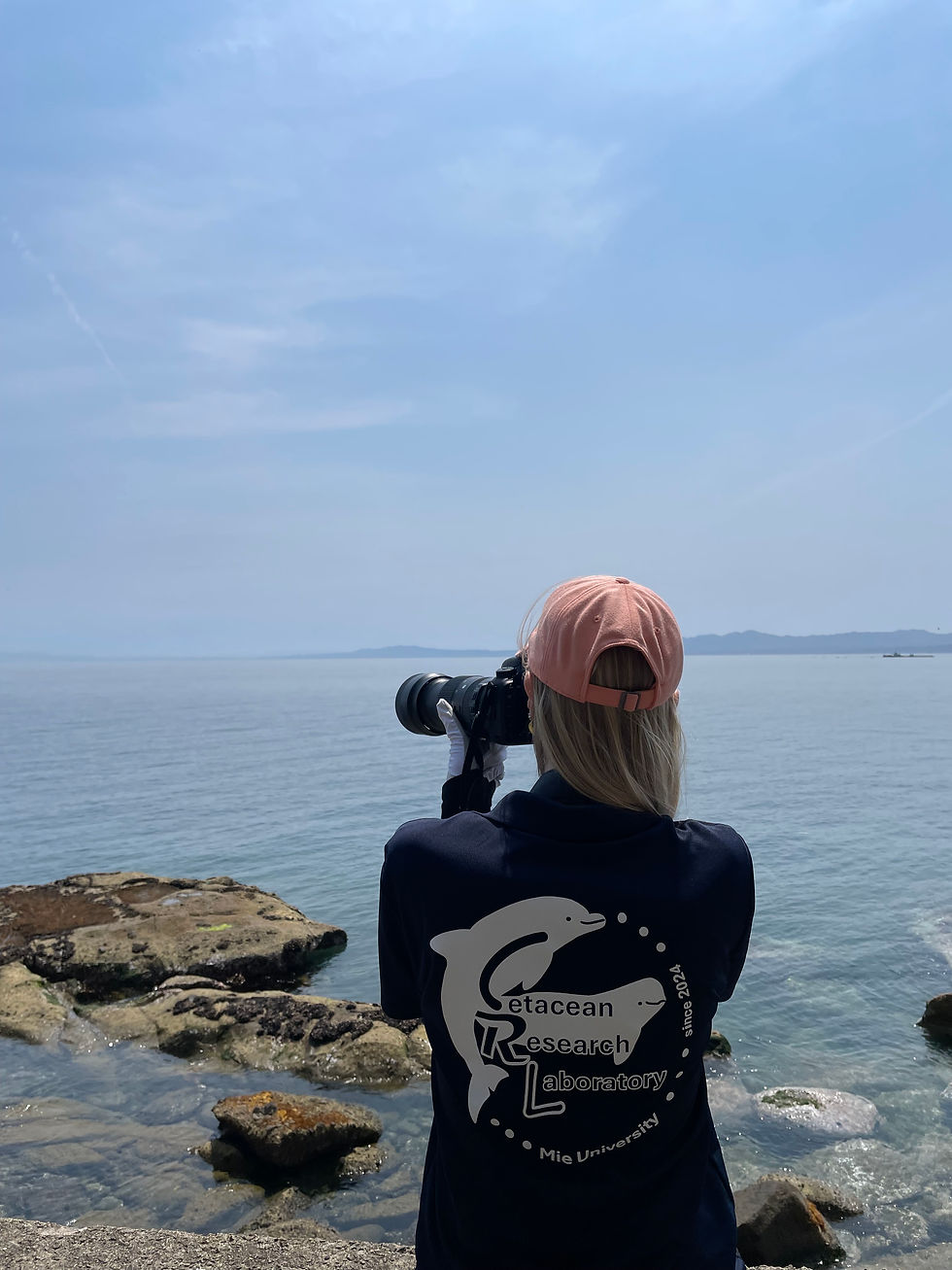
This year we realised the importance and value of landwatches. The Shimokita peninsula is a unique place in that these usually pelagic dolphins can be seen from land and come so close that we can even collect photo-ID data, making it one of the best places in the world to observe this species. We even saw some recognisable individuals from this year's landwatches, making them a vital part of our research.
During my second and final week in Aomori, I shared these latest landwatch ID snaps with Wakinosawa primary school making a game out of matching the same individuals and even trying to encourage the kids to take their own photos for our work. This was my 5th annual presentation at this local school that now only has 8 kids in the whole primary school - a growing problem with Japan’s declining population. These kids have always inspired me, their passion for their local dolphin visitors and their excitement for our talks always amazes me. They give me hope of establishing coastal community cetacean watching groups around Japan.
We were also joined by a lovely mother and daughter from Nagoya. The young girl had been struggling with school and so our director thought a few trips out with the dolphins might help instil some confidence and motivation in her. I always love witnessing people, especially youngsters, find joy in cetaceans and the sea. As the days went by she came out of her shell more and more, seeing the dolphins socialising, chasing our boat and gathering in big feeding groups. The last few surveys were filled with roughhousing dolphins, making me squeal with delight at their amazing acrobatics and beautiful faces as they were spy hopping. Socialising is often a great behaviour for capturing great ID shots as they stay in one place at the surface for long periods and often come close to our boat in their excitement.

Although this year didn't go according to plan, I still managed to have a fantastic two weeks and collect valuable photo-ID data for our study. At the moment, next year is looking uncertain as research grants are proving especially difficult to find. This year was my 8th year running in Aomori. I've been studying these dolphins for a while now and I want to keep my work continuous for as many years as I can. I'm completely dedicated to uncovering more about this gorgeous understudied species.
My research trip this year was funded for the second time by the Wildlife Research Center (Kyoto University)
References:
Suzuki, M., Ohno, K., Sawayama, E., Morinaga, S.-I., Kishida, T., Matsumoto, T., & Kato, H. (2023). Genomics reveals a genetically isolated population of the Pacific white-sided dolphin (Lagenorhynchus obliquidens) distributed in the Sea of Japan. Molecular Ecology, 32(4), 881–891. https://doi.org/10.1111/mec.16797


Comments